
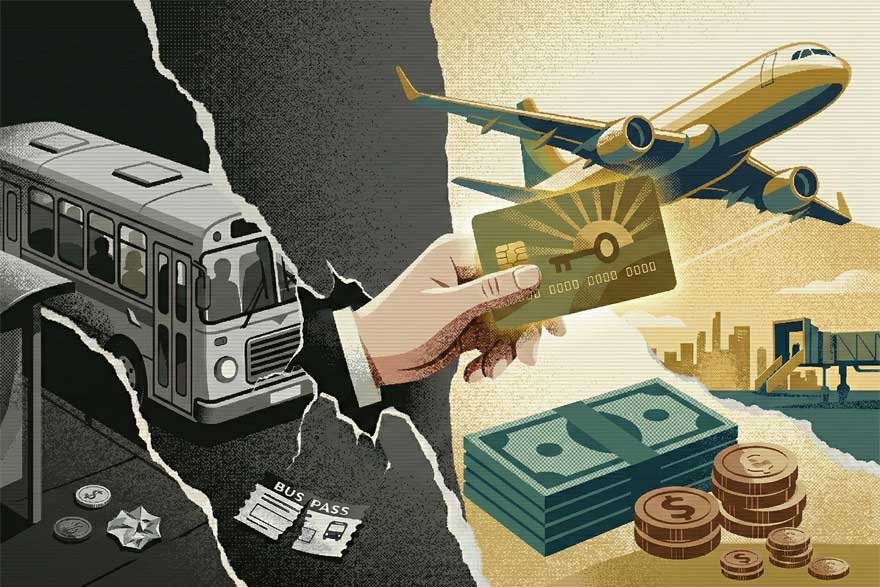
Do you remember the exact day you got your very first credit card?
Maybe it was a secured card you desperately needed just to prove to the banks that you could be trusted. Or perhaps it’s that basic, no-frills piece of plastic with a laughable $500 limit and an interest rate that keeps you awake at night. For a while, you were just grateful to be in the game.
But lately, staring at that card feels like wearing shoes three sizes too small. You are outgrowing your financial past. You see friends flying across the country on travel points. You watch coworkers snag 5% cash back on groceries. Meanwhile, you’re stuck earning absolutely nothing, paying a ridiculous annual fee for the privilege of carrying a card that does nothing for you.
You desperately want an upgrade. But a heavy, nagging fear holds you back: What if applying ruins my credit score?
You’ve worked exhaustively to build your FICO score from the ground up. You know that hitting “Apply” usually triggers a hard inquiry, which can instantly shave points off your hard-earned profile. What if you take the hit, only to get denied? The anxiety is paralyzing.
Here is the truth that big banks don’t actively advertise: you don’t have to choose between keeping your credit score safe and getting the perks you deserve. If you want to know how to get a better credit card without hurting your score, you need to stop playing by the outdated rules of the credit game. Let’s break down exactly how you can upgrade your wallet today without sacrificing a single point.
The 2026 Credit Reality: Why You Can’t Afford to Settle
Let’s get brutally honest about the current financial landscape. Average credit card interest rates are stubbornly hovering right around 20%, with some cards meant for “fair” credit punishing users with rates over 28%.
Inflation has fundamentally changed how we spend. Everything from your weekly grocery run to filling up your gas tank takes a massive bite out of your paycheck. Consequently, if you are using a card that doesn’t reward you for these everyday necessities, you are effectively leaving free money on the table.
Worse still, staying loyal to a sub-tier starter card might be actively hindering your financial growth. Low credit limits drag down your credit utilization ratio. Maybe you are finally tackling a major project like an apartment renovation, and putting all those new bathroom fixtures and painting supplies on a low-limit card maxes it out instantly. This makes you look incredibly risky to lenders when you eventually want to secure a mortgage or finance a vehicle.
You need a card that works for you, not against you. However, you also must protect your FICO score at all costs.
The “Product Change” Secret: Upgrade Your Credit Card Without a Hard Pull
If there is only one strategy you take away from this guide, make it this one. It is the absolute best way to get a better credit card without hurting your score.
In the banking world, this maneuver is known as a “product change.”
Instead of applying for a brand-new line of credit, you are simply asking your current credit card issuer to swap your existing account to a different, higher-tier card within their own ecosystem.
Why is this so incredibly powerful? Because you are utilizing an existing line of credit, the bank already has your financial profile on file. Therefore, they almost never perform a hard credit inquiry. Your credit score remains completely untouched.
Furthermore, you retain your original account’s age. The length of your credit history accounts for 15% of your total FICO score. If you cancel your old card and open a new one, you reset the clock and damage your credit age. With a product change, that ten-year-old starter card seamlessly morphs into a premium rewards card, taking all that beautiful account history with it.
How to Execute a Product Change
Taking advantage of this loophole is surprisingly simple.
- Do Your Homework: Browse your current issuer’s website. Look for cards with better cash back, lower fees, or superior travel perks. Make sure the new card is in the same family (e.g., upgrading a basic cash-back card to a premium cash-back card).
- Make the Call: Flip your current card over and dial the customer service number on the back.
- Use the Script: Say something like, “I’ve been a loyal customer for a few years, but my current card no longer fits my spending habits. I am interested in doing a product change to the [Name of Target Card]. Can we make that happen without a hard credit pull?”
Most representatives are trained to process these requests in minutes. Just like that, you upgrade your credit card without hurting your score.
Leverage Soft Pull Pre-Approvals
Sometimes, a product change isn’t an option. Maybe you have a card from a subprime lender, and they simply don’t offer any good rewards cards to upgrade to. You need to break up with them and find a completely new bank.
Consequently, you have to apply for something new. But how do you avoid the dreaded rejection and the subsequent credit score drop? You need to aggressively utilize pre-qualification tools.
Almost all major credit card issuers today offer a “See If You’re Pre-Approved” tool on their websites. These tools use what is called a “soft inquiry” or “soft pull.”
A soft pull takes a quick peek at your credit profile to gauge your eligibility, but—and this is the crucial part—it is invisible to other lenders and has absolutely zero impact on your credit score.
By running your name through these pre-qualification pages, you remove the guesswork. While a pre-approval isn’t a 100% ironclad guarantee, it dramatically lowers your risk of rejection. You only submit an official application (which does trigger a hard pull) when you already know the bank wants you.
The Utilization Hack: Shrink Your Debt-to-Limit Ratio First
Before you even think about seeking a new card, you must optimize your current standing. The biggest emotional stressor of applying for new credit is feeling like your score is too fragile. Let’s bulletproof it first.
Credit utilization—how much debt you carry compared to your total available credit limit—makes up a massive 30% of your credit score. If you are maxing out a card with a tiny $500 limit, your utilization is 100%, and your score is bleeding out. To easily get a better credit card without hurting your score, fix your utilization right now.
- Pay down the balance: If possible, pay your balance multiple times a month so the statement always closes near zero.
- Request a Credit Limit Increase (CLI): Ask your current issuer for a higher limit. Many issuers allow you to request this via their mobile app using only a soft pull.
If your limit doubles, your utilization ratio is cut in half overnight. Your score will organically jump, making you a much stronger candidate for premium cards.
The Authorized User Piggyback Strategy
If your credit history is thin or bruised, getting approved for top-tier rewards cards can feel impossible. But there is a backdoor. Ask a trusted family member or partner who has excellent credit and a premium card to add you as an “Authorized User” on their account.
When they do this, the entire history of that specific credit card account—its age, its perfect payment history, and its high credit limit—is legally copied and pasted onto your personal credit report.
You don’t even need them to actually hand you the physical card; they can keep it locked in a safe. The mere act of being attached to the account elevates your credit profile. Once your score experiences this artificial boost, you can apply for your own high-quality card with supreme confidence.
Taking Control of Your Financial Future
You are not destined to be trapped with a terrible interest rate and zero rewards forever. The financial anxiety you feel when looking at your starter card is valid, but it is also completely solvable.
By demanding a product change, utilizing soft pull pre-approvals, and manipulating your credit utilization, you take the power away from the banks and put it back in your own hands. You deserve to be rewarded for your everyday spending. Stop letting the fear of a temporary point drop hold you hostage.
Frequently Asked Questions (FAQ)
Does requesting a credit limit increase hurt my credit score?
It depends entirely on the issuer. Some banks perform a “soft pull,” which does not hurt your score at all. Others require a “hard pull,” which can cause a temporary dip of a few points. Always call your bank or check their online portal terms to verify which method they use before requesting the increase.
Can I upgrade my secured card to an unsecured card without a hard pull?
Yes. This is one of the most common product changes. Once you have demonstrated a history of on-time payments (usually 6 to 12 months), most issuers will automatically “graduate” your secured card to an unsecured version, returning your initial deposit and keeping your credit history fully intact.
Will closing my old, bad credit card hurt my score?
Yes, it likely will. Closing an old account reduces your overall available credit (spiking your utilization ratio) and eventually shortens your average age of accounts. If the old card has no annual fee, throw it in a drawer and put a small recurring subscription on it to keep it active. Only close it if the annual fee is predatory and the issuer refuses to product change it.
Be First to Comment